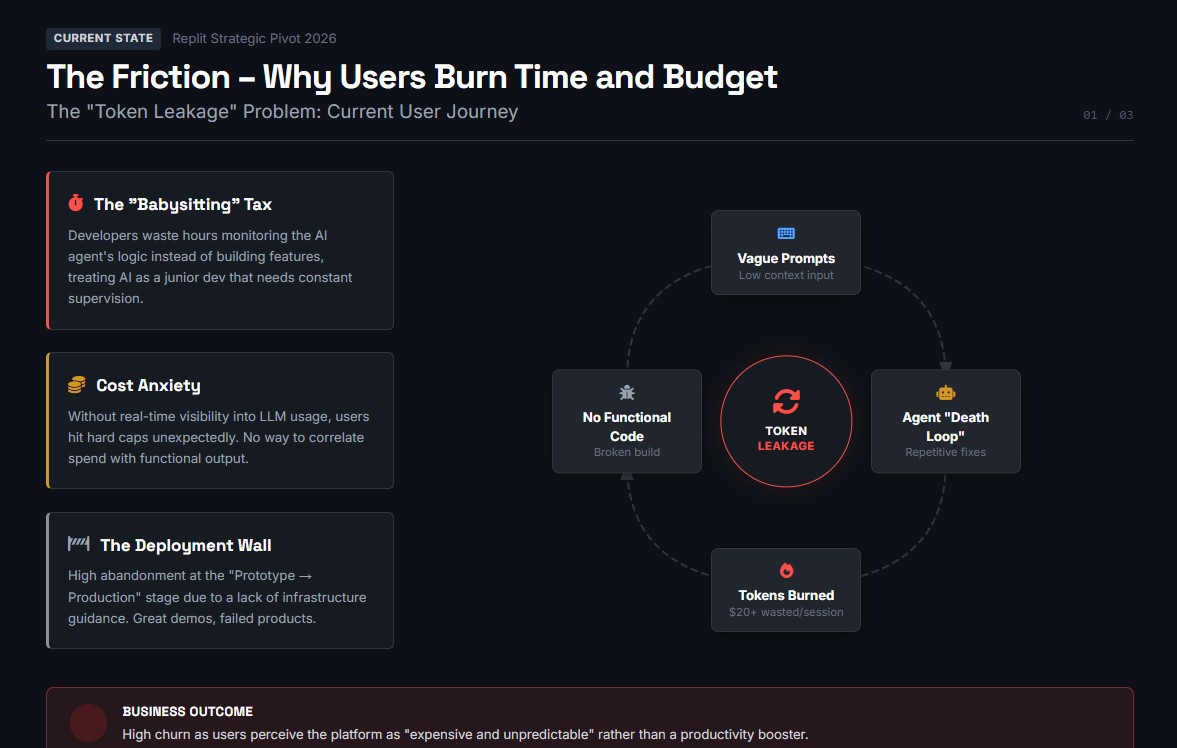
The "token leakage" loop
You describe the app loosely, the agent guesses, something breaks, the agent tries to fix it, something else breaks. Every lap costs credits. In my sessions it was easy to spend $20 or more and still not have working code.
Vague prompt
Three frictions behind it
You end up watching the agent's every move instead of building features. It's like supervising a junior developer who never learns.
There's no real-time view of LLM usage, so people hit hard caps without warning, and can't connect what they spent to what actually works.
Lots of people drop off between prototype and production because there's little guidance on infrastructure. Great demos, unfinished products.
Two very different users hit the same wall
- Needs
- To get from an idea to something real without knowing what to ask the agent for.
- Gets stuck
- Early, in the loop. Doesn't know why it broke or what a good prompt looks like.
I've spent my credits and I still can't show this to anyone.
- Needs
- Clean code they own, a way to bring in designs, and a path to production.
- Gets stuck
- Late, at the deployment wall, and worried about lock-in.
The demo works. Now how do I ship this for real?
Personas are illustrative.
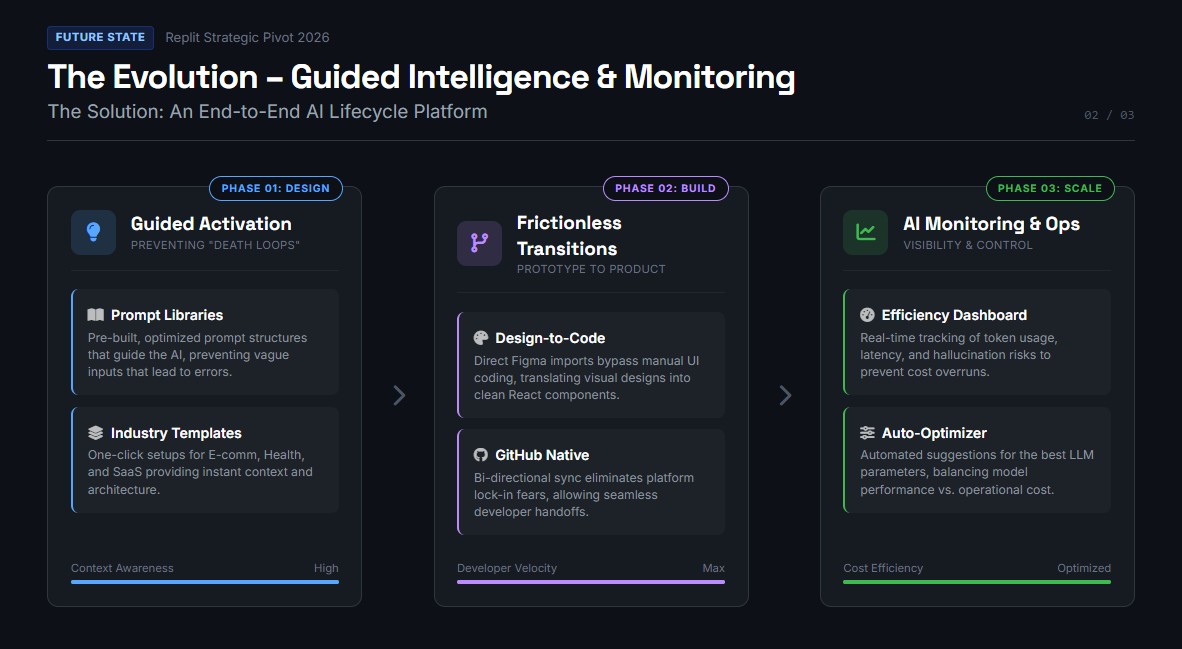
Design, build, scale: one phase per wall
Guided activation
Stop the loop before it startsSmoother handoffs
Prototype to productAI monitoring and ops
Visibility and controlSmaller ideas I added
From my notes, the things I kept wishing for mid-build:
From coding tool to the place you run your AI business
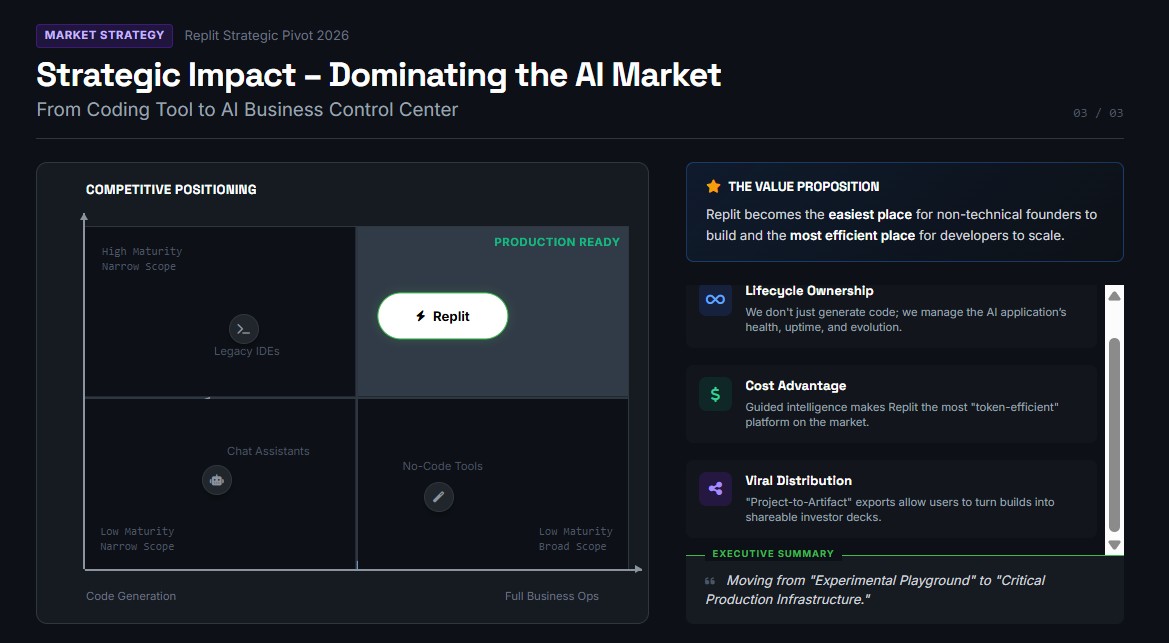
On my positioning map, legacy IDEs are mature but narrow, chat assistants and no-code tools are early, and the open space is production-ready and broad: tools that run the whole business, not only generate code.
Replit becomes the easiest place for non-technical founders to build, and the most efficient place for developers to scale.
Look after the app's health, uptime and changes after launch, not only the first build.
Guided prompts and monitoring make Replit the most token-efficient place to build.
Export a project as a shareable artifact, like an investor deck, so every build spreads the product.
Phase 3 is what I built for Ridge Health
My Ridge Health admin console tracks LLM calls per provider, latency, errors and cost per task against SLO targets. It caught a 100% error rate I'd never have noticed otherwise. That's the kind of visibility I'm asking Replit to give everyone.
See the Ridge Health evals →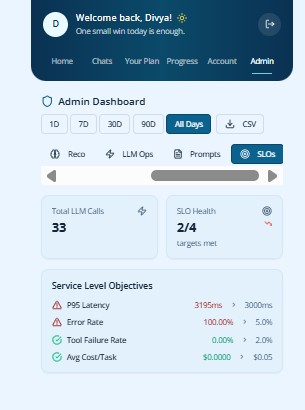
What I'd track if I were on the team
Measures whether people actually get past both walls.
- Tokens spent per successful build
- Repeated agent fix attempts per session
- Time to first working preview
- Projects started from a template
- Users who see spend before hitting a cap
- Unexpected cap hits per user
- Churn after the first bill
- Drop-off between preview and deploy
- Revenue per active builder
What writing this taught me
A loop diagram made the problem obvious in a way a list of complaints never would.
People don't mind paying. They mind paying without knowing what they got for it.
Feedback lands when it connects user pain to churn and growth, not just to annoyance.